PCCS HPV survey: field data collection
An offline Android app and live web dashboard for a province-wide HPV vaccination survey: random household draws, encrypted forms that sync when signal returns, supervisor review and reporting for WHO.
- Client
- HPV post-campaign coverage survey, Khyber Pakhtunkhwa
- Sector
- Public health research
- Year
- 2026

After an HPV vaccination campaign for girls aged 9 to 14 in Khyber Pakhtunkhwa, a coverage survey had to measure how many girls were actually vaccinated, and why some were not. It covered 360 clusters and 50,621 listed households, with field teams working where mobile signal is weak or absent, and partners, including WHO, who needed to follow progress and quality day by day.
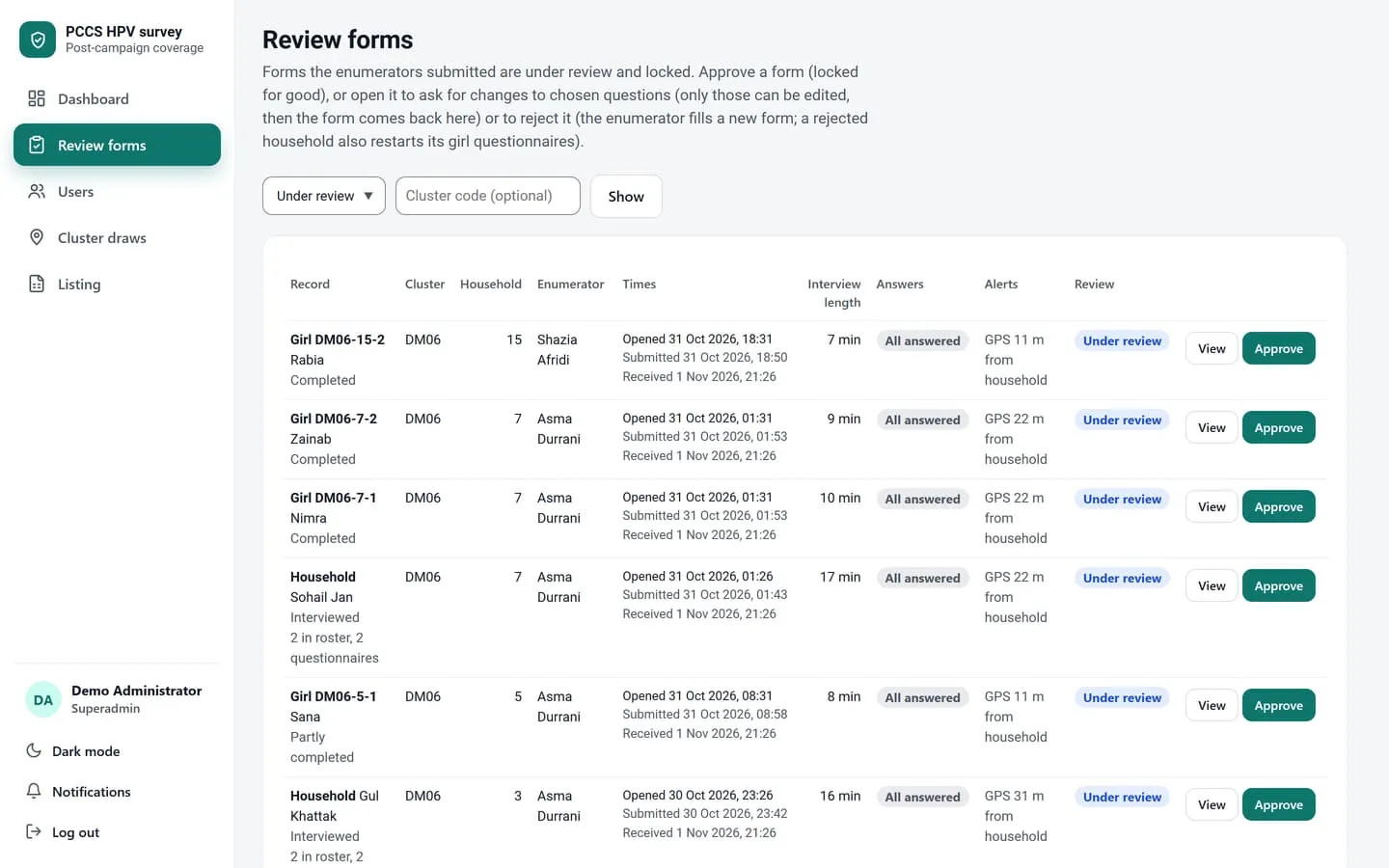
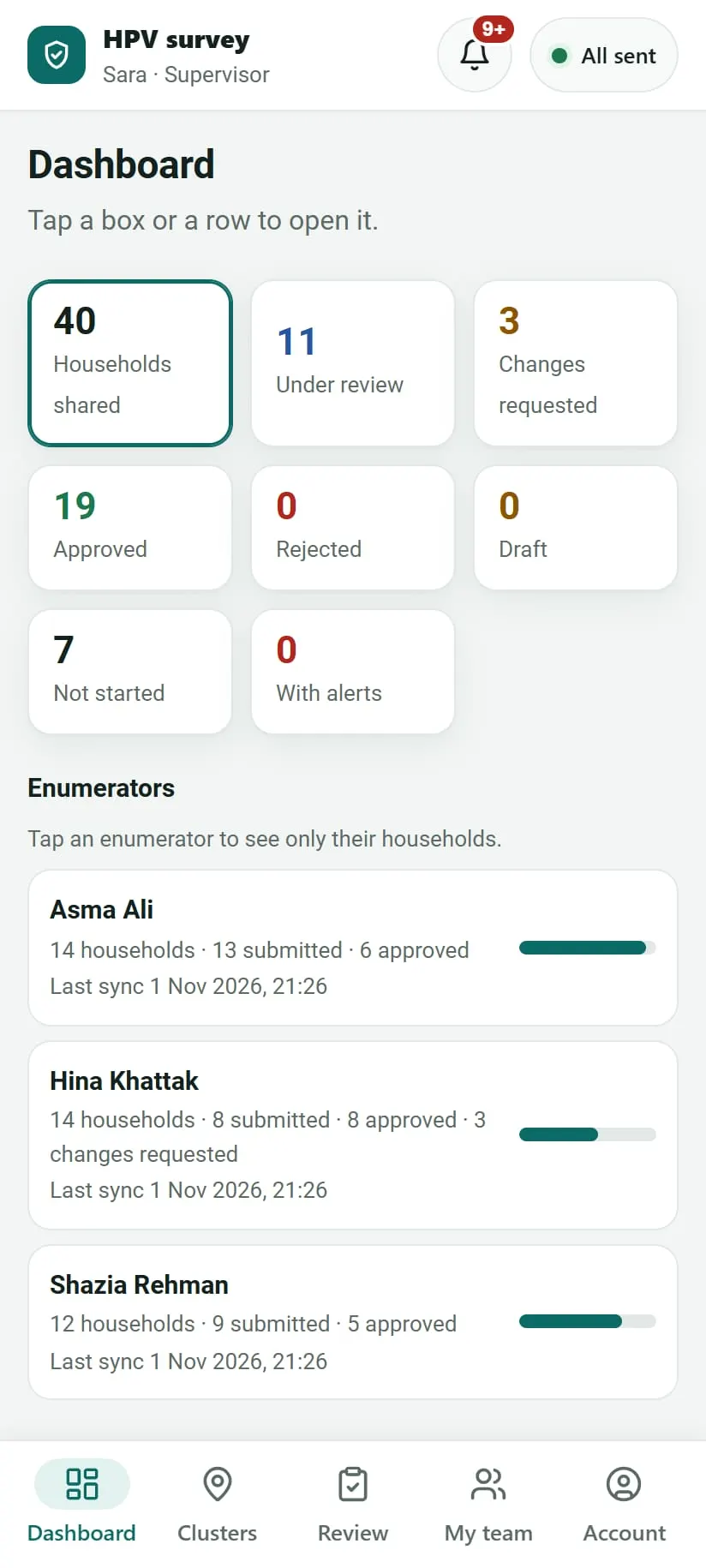
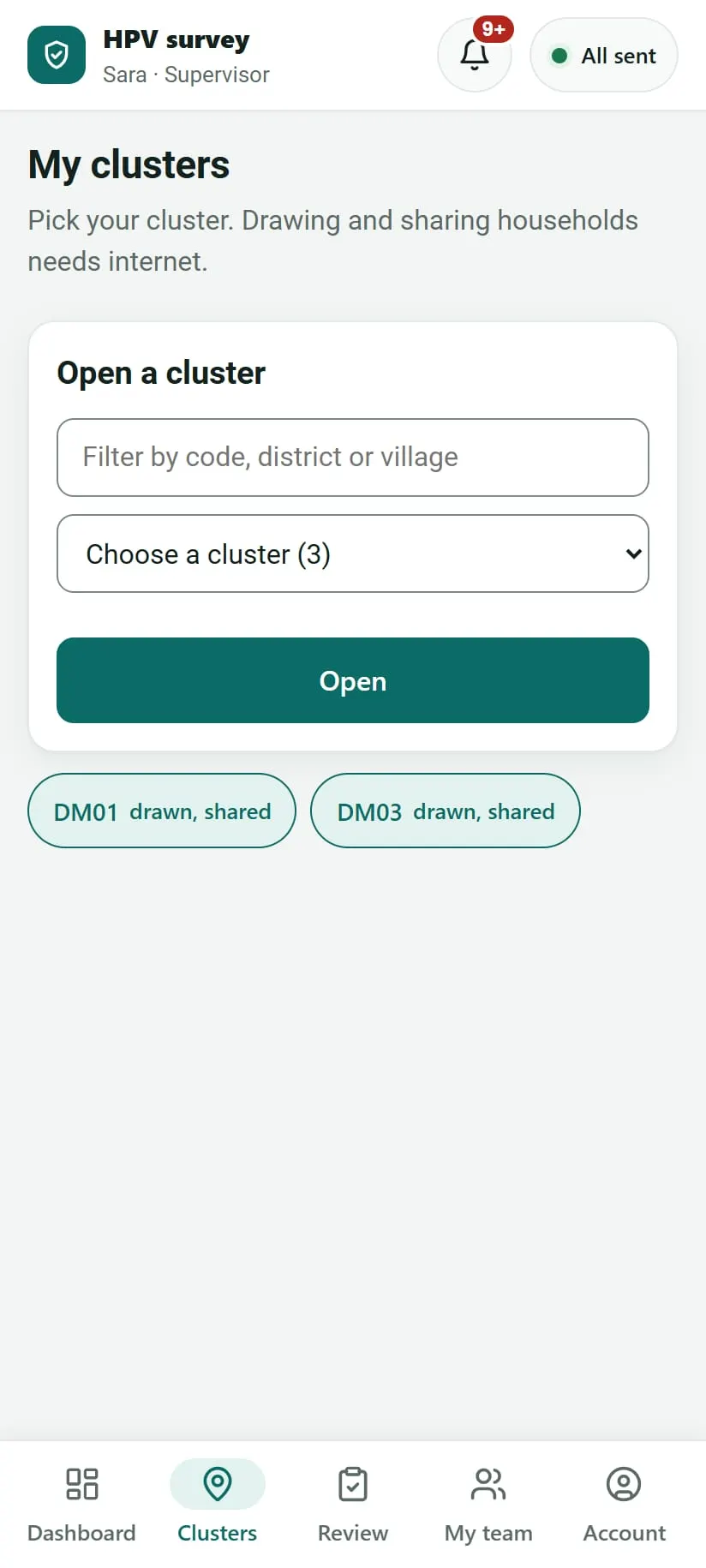
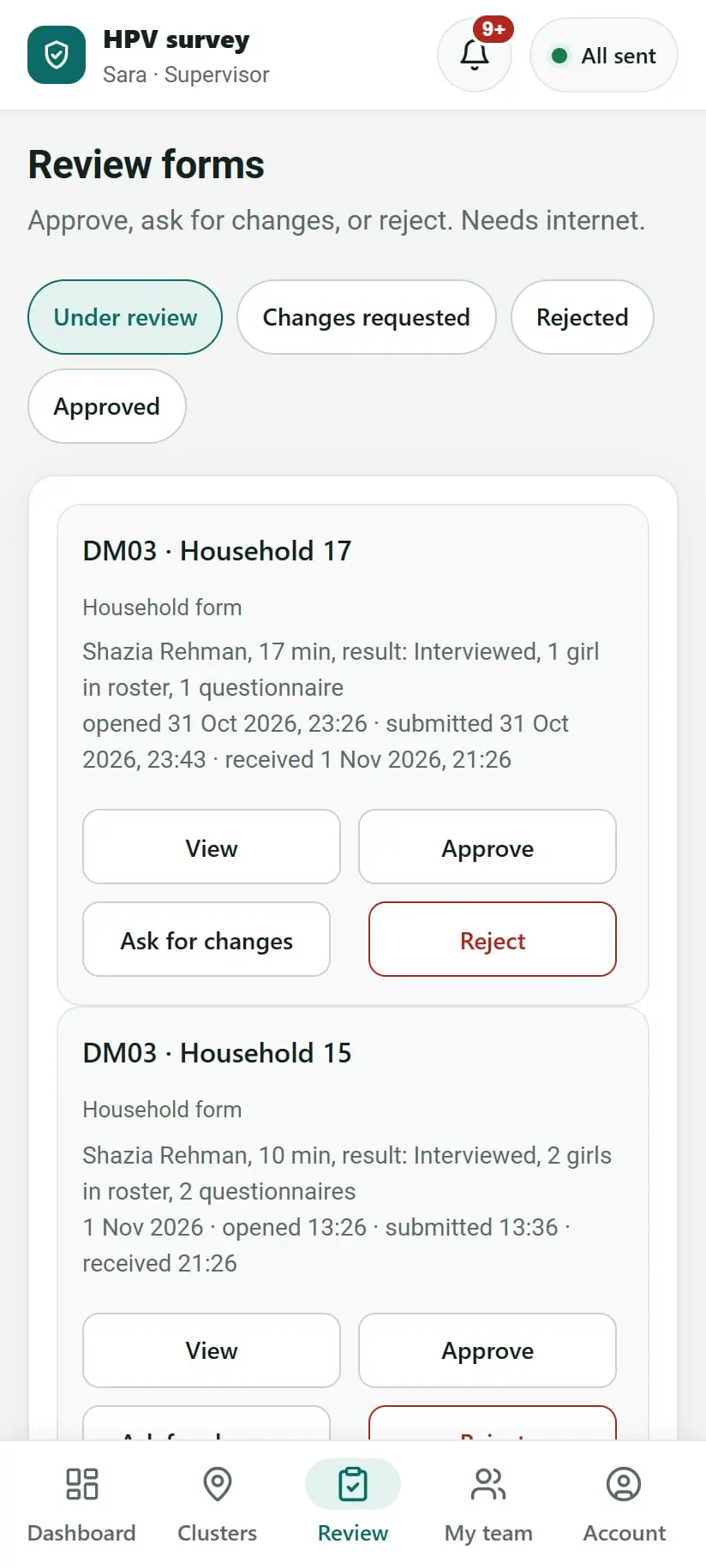
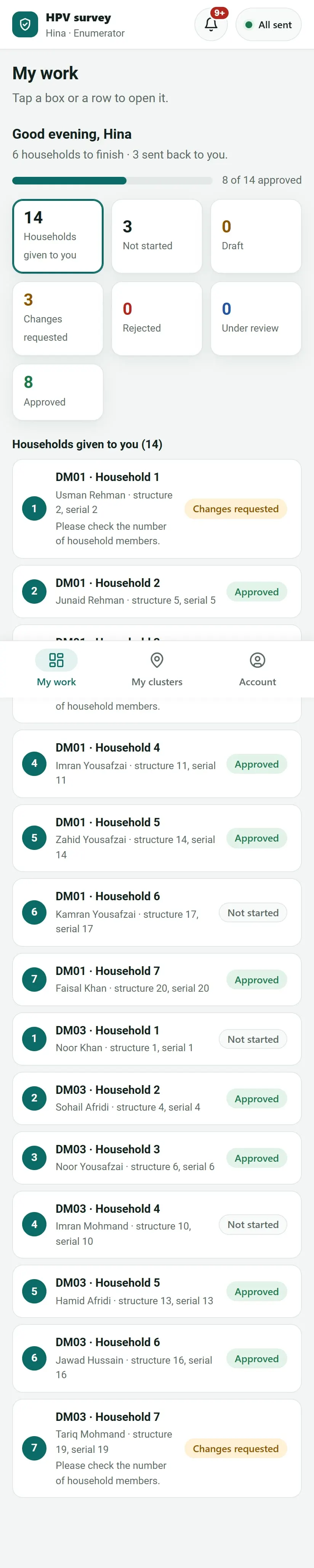
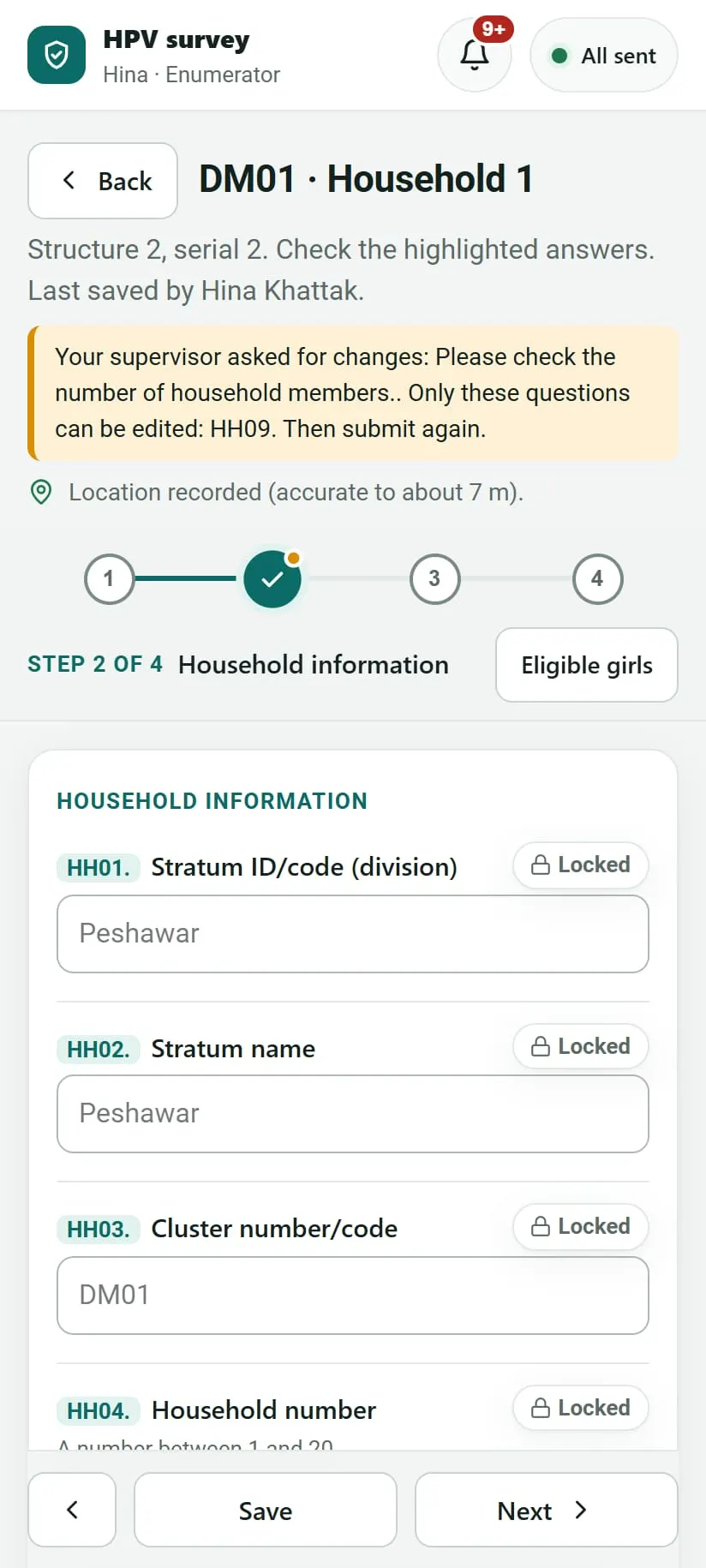
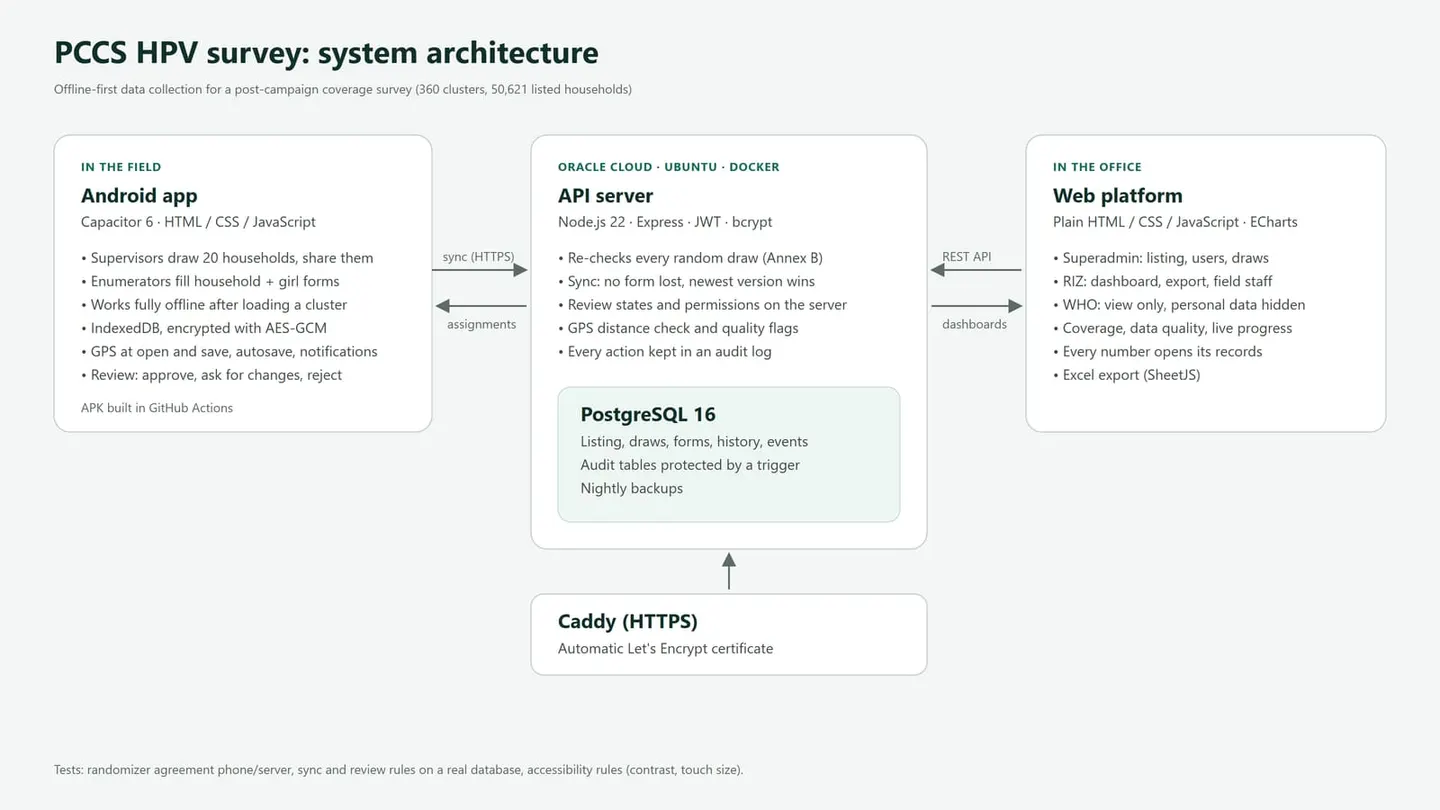
We built an offline-first Android app for the field. Supervisors draw 20 households per cluster with the survey’s systematic random method and share them among their enumerators, who fill a household form and one questionnaire per eligible girl. Forms are encrypted on the phone, autosaved, tagged with GPS and synced automatically when a connection returns. Supervisors review every form on the phone: approve, ask for changes to chosen questions, or reject.
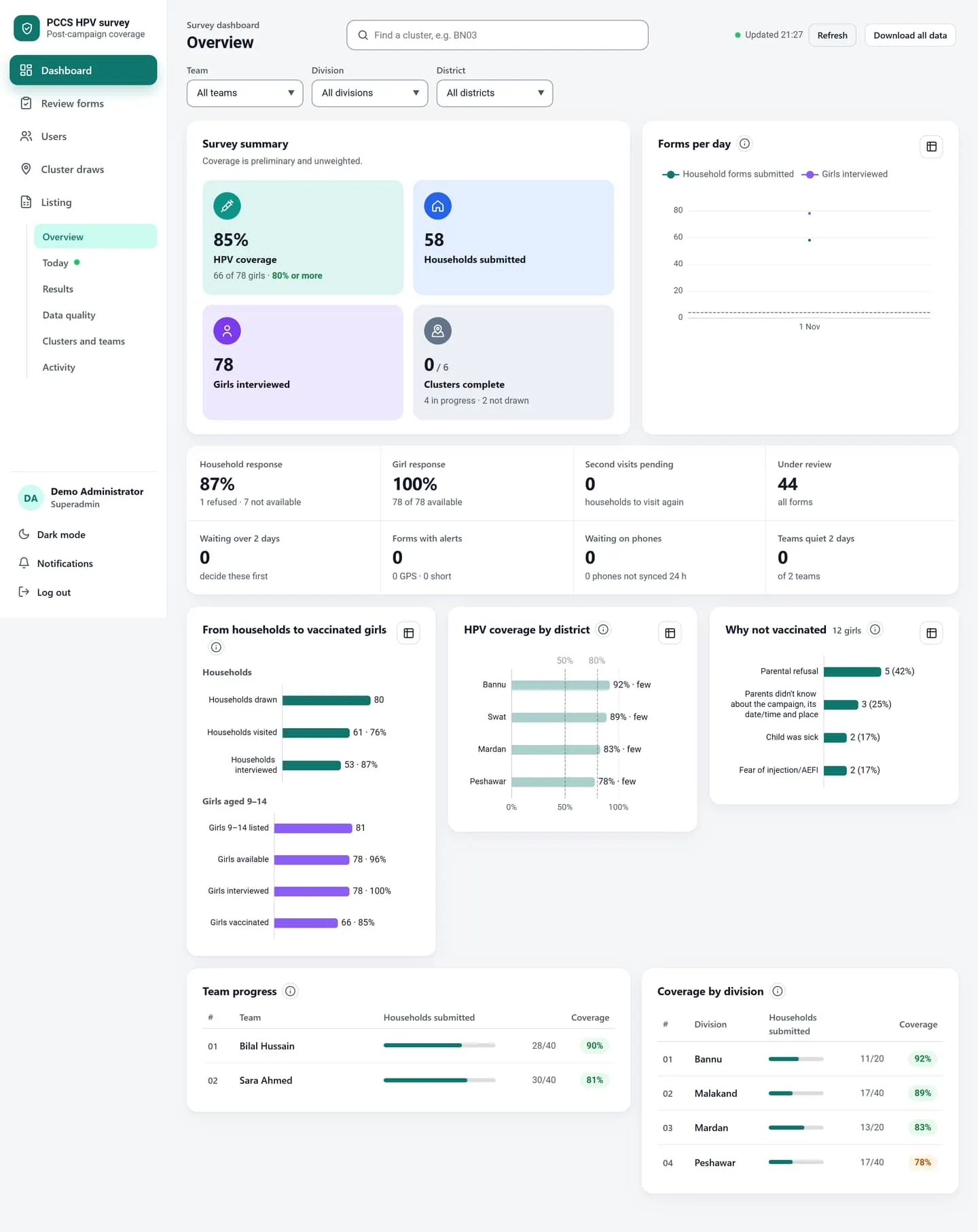
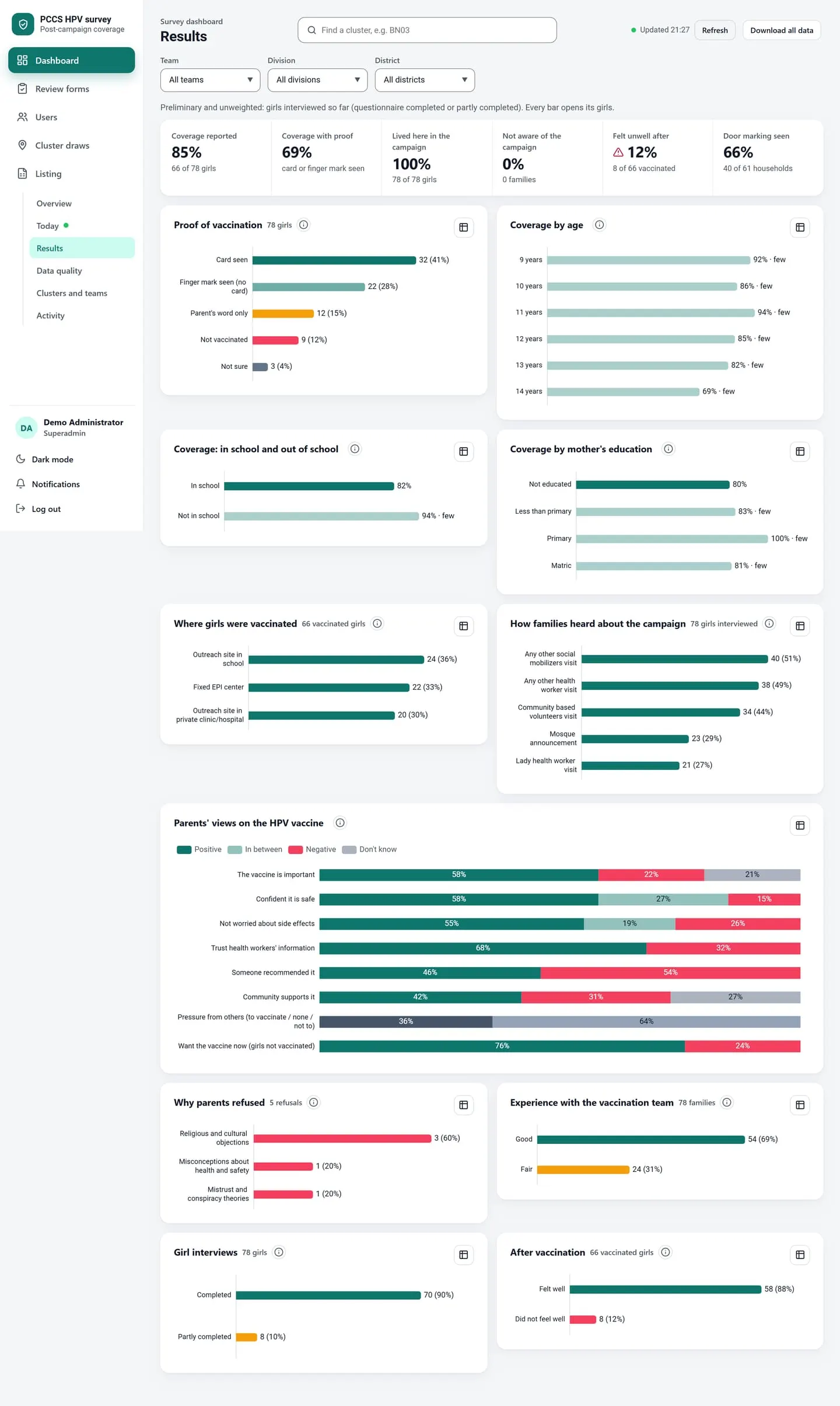
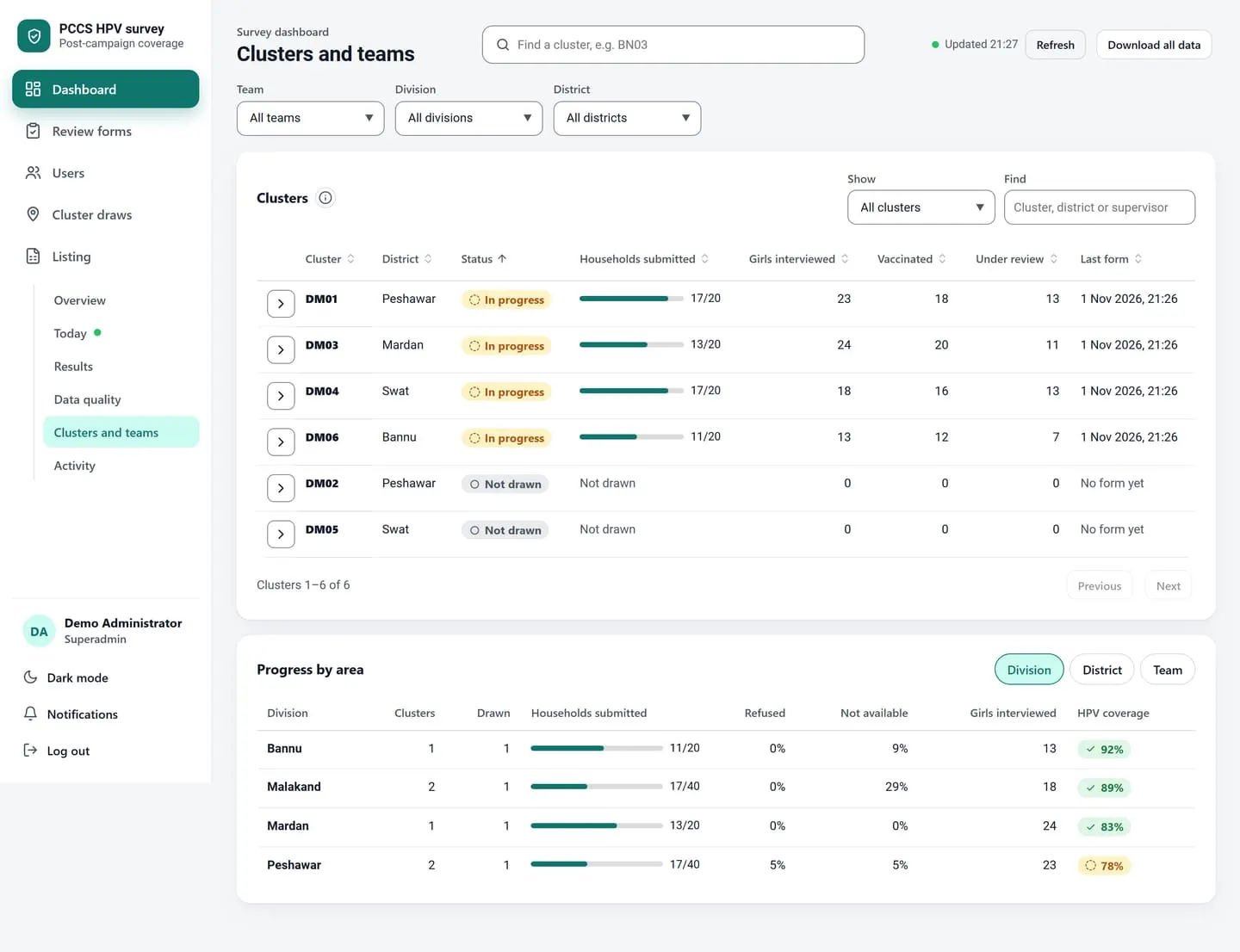
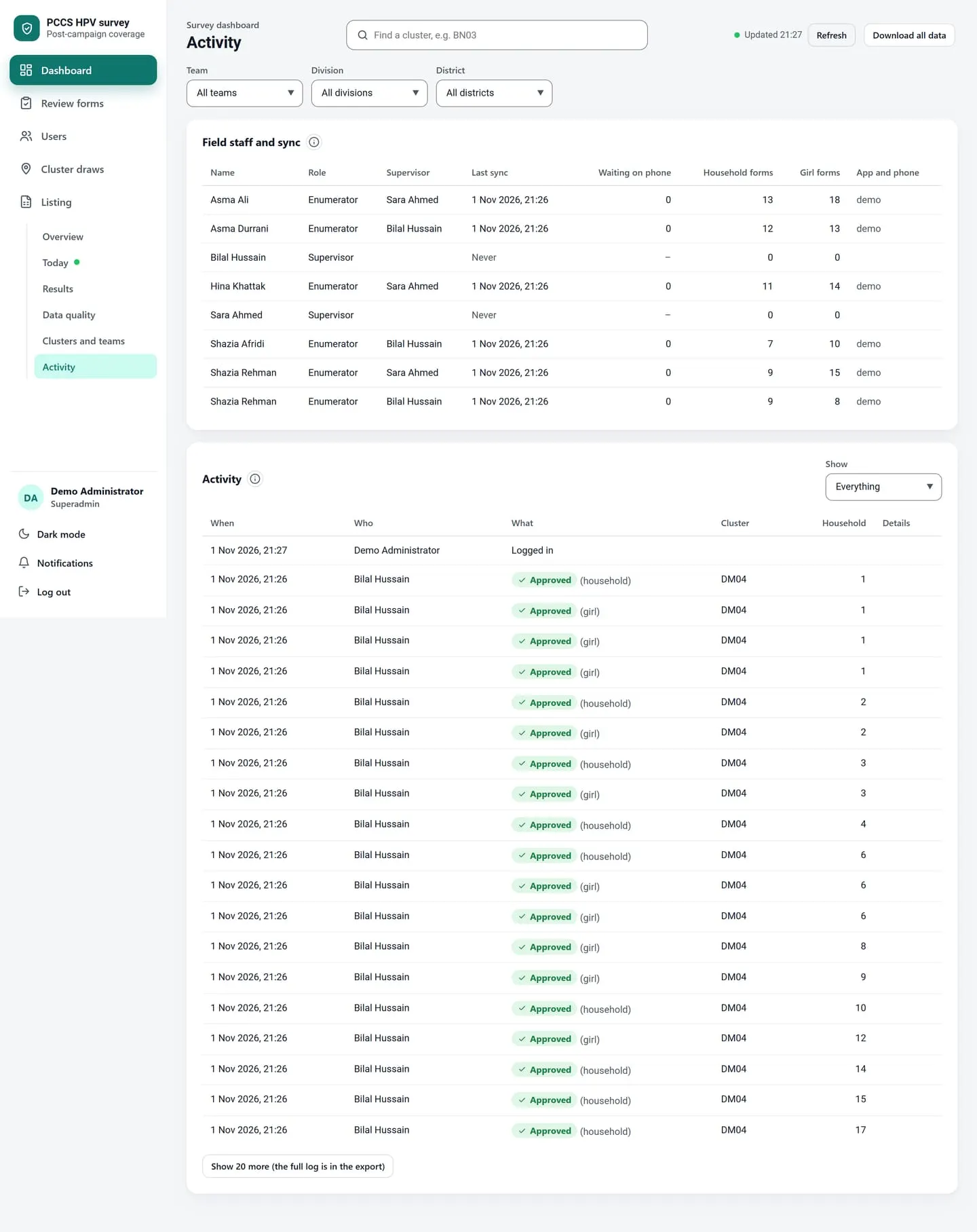
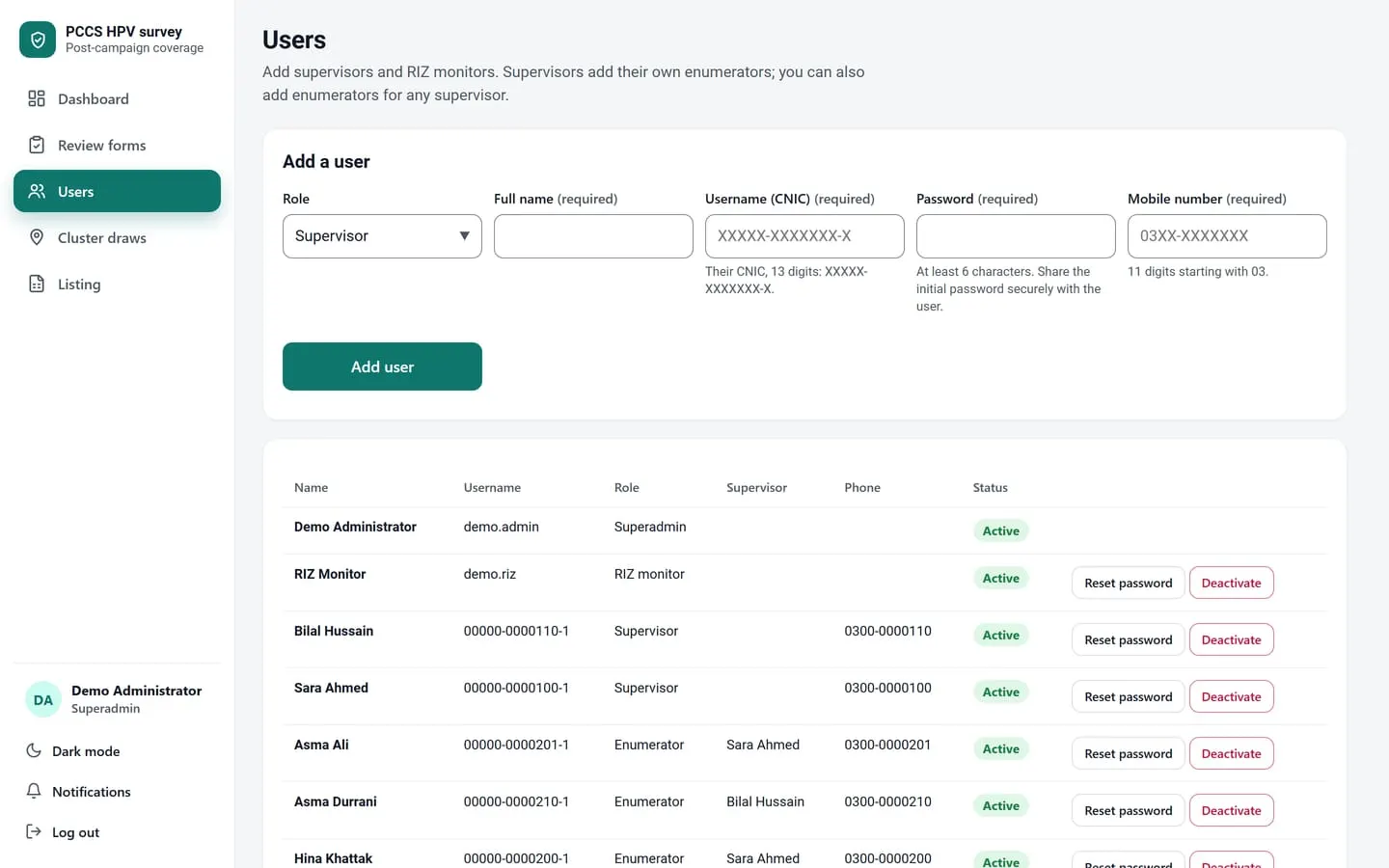
For the office, we built a live dashboard by division, district, team and cluster, covering coverage, response rates, data quality and the day’s progress, where every number opens the records behind it. Access depends on role: administrators manage the listing and users, the monitoring team views and exports, and WHO sees everything with personal details hidden.
The server enforces the survey’s rules. It re-checks every household draw against the official randomiser, keeps review states and team limits, and never lets an older form overwrite a newer one. It runs on Oracle Cloud with Docker, PostgreSQL and nightly backups, with app builds automated in GitHub Actions and 88 automated tests.
The screens here come from a demo copy with made-up data.
Screens
3 pages · 19 screenshots